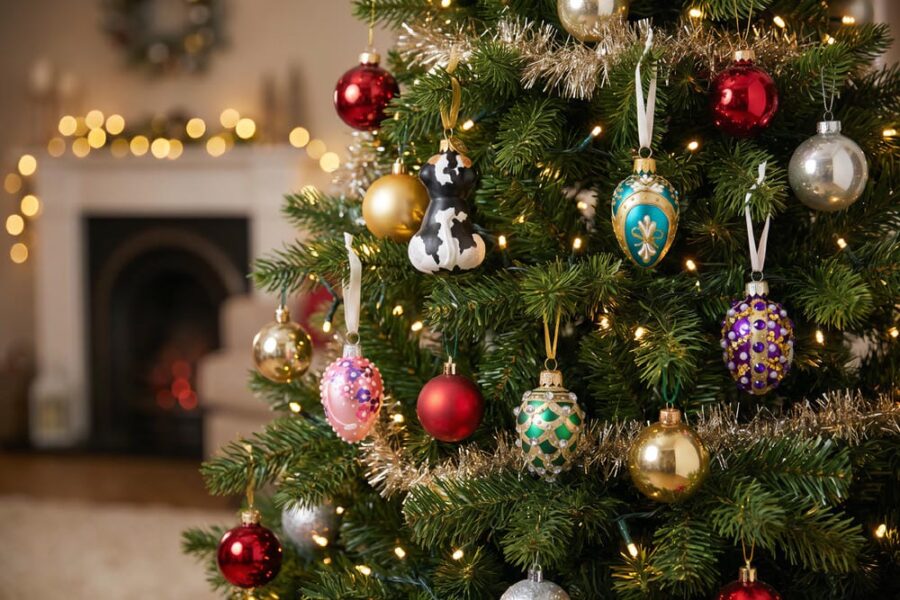
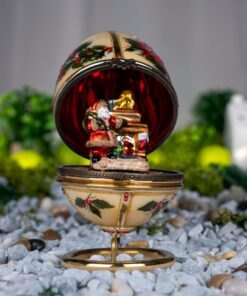
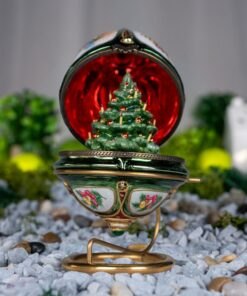
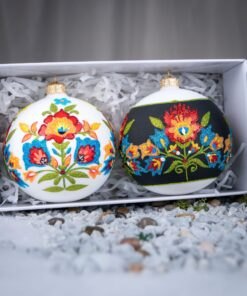
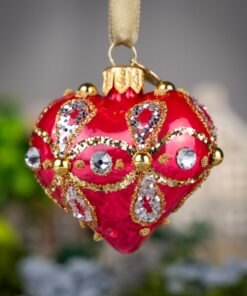
Small Christmas baubles add depth and elegance to the tree. Tiny ornaments fill the space between branches, creating an illusion of lushness. They hide gaps and visually thicken the tree. Evenly distributing these elements changes the overall perception. Discover the potential of miniature holiday decorations.
Few decorators realize how much small Christmas baubles influence the final look of a tree. Seemingly inconspicuous, tiny ornaments can completely change the character of a Christmas tree, giving it depth, elegance, and cohesion. An effect that is difficult to achieve with large balls alone becomes natural through the sensible use of miniature ornaments.
The secret lies in proportions and placement. Small Christmas baubles go where larger ornaments simply don’t fit, i.e., deep within the branches, near the trunk, and between other decorations. They fill the space evenly, making the entire tree look denser and fuller, even if it has relatively few branches.
Regardless of the decoration style, from classic to modern minimalism, small ornaments work wonderfully. They can be glass, ceramic, matte, or shiny. One thing is important: well-chosen and wisely placed small-sized Christmas ornaments always make an impression.
Why do small Christmas baubles visually enlarge and densify a Christmas tree?
Every Christmas tree has its weak spots, sparser sections of branches, gaps, and areas where greenery is lacking. Small ornaments effectively hide these imperfections. Moreover, the density of ornament placement directly affects how the entire tree is perceived. Tiny baubles create an illusion of lushness that no other decorative element can replace.
How the placement of small ornaments affects the perception of branch density
The human eye interprets space based on fullness. When the branches of a Christmas tree are densely adorned with small ornaments, the brain registers the tree as fuller than it actually is. Small baubles hung close to the trunk, on inner twigs, create the impression of additional layers. The effect is subtle but clearly noticeable.
Evenly distributing small ornaments throughout the entire height of the Christmas tree makes the tree look uniform. There are no “empty” zones or areas where the eye stops due to a lack of decoration. This is particularly evident with natural Christmas trees, which by nature have uneven branch density.
Recommended zones for hanging small baubles:
- on inner branches, close to the tree trunk
- in the upper part of the tree, where the branches are sparsest
- between other ornaments, as space fillers
- on the ends of small twigs in the middle section of the tree
It’s worth starting the decoration from the inside of the Christmas tree. Once the inner layer is adorned with small baubles, it’s easier to assess how many and where to add more ornaments on the outer branches.
The effect of depth and symmetry achieved by multi-layered bauble hanging
The three-dimensionality of a Christmas tree is revealed when ornaments occupy different depth levels. Small baubles placed deep among the branches create a background, while those on the tips of branches come to the forefront. This arrangement gives the tree a natural, spatial structure.
Symmetry is another effect that small ornaments can enhance. Regularly spaced small spheres set the rhythm of the composition and guide the eye along the entire silhouette of the tree. The effect is more pronounced when the baubles are uniform in color or surface finish.
Three levels of hanging depth, near the trunk, in the middle of the branch, and at its end, is a proven method used by professional decorators. This makes every part of the tree appear full and carefully planned.
How small baubles emphasize the natural shapes of fir, spruce, and pine trees
Each type of tree has a different character. Fir trees have stiff, horizontal branches and a dark green color, spruce trees are more slender and regular, while pine trees have long needles and slightly drooping branches. Small baubles adapt to these differences better than large ornaments.
On fir trees, small baubles arrange themselves along the branches in natural rows, emphasizing the tree’s horizontal structure. On spruce trees, they fill the space between short needles, creating a uniform texture. Pine trees, in turn, look best with baubles hung at the ends of the branches, where the green naturally concentrates.
By observing the structure of a specific tree before decorating, one can adjust the number and placement of ornaments. This approach yields a much better effect than randomly hanging baubles without a plan.
Small baubles and decoration styles, from classic to modern minimalism
Choosing a decoration style is one of the most important decisions before decorating a Christmas tree. The Christmas tree decoration style determines not only the color scheme but also the texture, shape, and proportions of the ornaments. Small baubles fit almost any style, and their small size makes them more versatile than larger ornaments.
Traditional color sets with small glass baubles
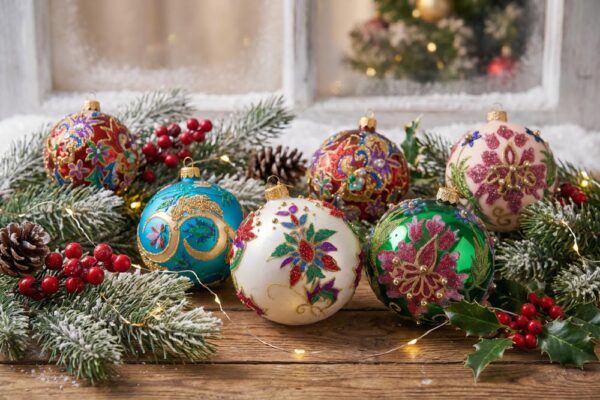
A classic Christmas tree is based on a combination of red, gold, and green. Small glass baubles in these colors are the foundation of traditional holiday decoration, present in Polish homes for generations. Glass reflects the light of the lamps, giving the whole a festive glow.
Traditional sets often combine baubles with different finishes, shiny next to matte, smooth next to ribbed. Such diversity within a single color palette makes the Christmas tree look rich and cohesive at the same time. Bombkarnia offers a wide range of hand-decorated glass baubles in classic color sets.
Components of a classic decoration with small baubles:
- glass baubles in shades of red and burgundy
- gold and copper spheres with satin or mirror finish
- green and emerald miniatures as a connecting element with the branch color
- ornaments with glitter or pearl surfaces as accents
Glass baubles last for many seasons without losing their color or shine. Such a choice is an investment in a decoration that never goes out of style and looks just as impressive every year.
Monochromatic Christmas tree with small matte balls in one shade
Modern aesthetics increasingly favor monochrome compositions. A monochromatic Christmas tree with small matte baubles is an example of a decoration that makes an impression with subtlety, not extravagance. One color in various shades and textures creates a cohesive, elegant whole.
A matte finish absorbs light differently than a glossy one, making the tree look more subdued and modern. Popular choices include shades of navy blue, bottle green, deep plum, or warm creamy beige. Each of these colors interacts differently with the natural green of the branches or a light-colored artificial tree.
Monochromatic decoration requires consistency. The contrast of textures, a matte bauble next to a pearlescent one, a smooth one next to one with a delicate pattern, replaces color variety and gives the composition dynamism.
Scandinavian and Rustic Style with Miniature Ceramic Ornaments
The Scandinavian style in Christmas tree decoration values simplicity and natural materials. Small ceramic ornaments fit perfectly into this aesthetic. They are lightweight, have a matte surface, and reference traditional folk patterns, evoking a warm, homey atmosphere.
Miniature ceramics often come in the shape of stars, hearts, small trees, or simple balls with engraved patterns. On a Scandinavian tree, they work well in white, gray, and natural clay. The rustic style uses similar forms but in warmer colors, brown, red, and white, often combining ceramics with wooden details.
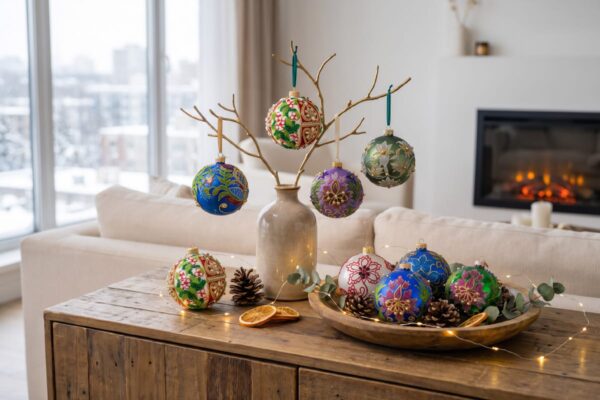
On a rustic or Scandinavian tree, it’s worth mixing miniature ceramic ornaments with pinecones and dried orange slices. Such a combination emphasizes the natural character of the decoration and gives it an authentic, cozy look.
Gloss and Splendor, Small Gold and Silver Baubles on a Dark Tree
A dark background, whether it’s a graphite artificial tree or the deep green of a dense spruce, provides an ideal backdrop for shiny ornaments. Small gold and silver baubles on a dark tree create a starry sky effect. The more small, shimmering balls there are, the more intense the sparkle of the entire decoration.
Small metallic baubles have an advantage over large ones: more can be hung, making the gloss effect more uniform. Gold pairs well with the warm light of lamps, while silver enhances the effect with cool white light.
Tip: On a dark tree, it’s worth combining gold baubles with small mirrored balls that reflect light at different angles. This technique enhances the sense of depth and makes the tree eye-catching even during the day.
How to Choose Small Baubles for the Size and Type of Christmas Tree?
Choosing baubles for a specific tree is more than just a matter of aesthetics. It’s about proportions, which determine whether the tree will look harmonious or chaotic. Choosing baubles based on the tree’s size helps avoid the most common decorating mistakes and achieve a captivating effect.
Optimal Bauble Diameter for Trees Below and Above 150 cm
The size of the baubles should be proportional to the height and density of the tree. For small trees, up to 120 cm in height, baubles with a diameter of 3 to 5 cm work best. Such ornaments do not overwhelm the tree and maintain proper proportions.
For trees with a height of 150 to 180 cm, baubles with a diameter of 5 to 7 cm are optimal. On large trees, above 180 cm, small baubles with a diameter of up to 5 cm serve as filler and complement, while the main ornaments can be 8 to 12 cm.
| Tree Height |
Recommended Diameter of Small Baubles |
Role in Decoration |
| up to 120 cm |
2–4 cm |
main decoration of the tree |
| 120–150 cm |
4–6 cm |
main and supplementary |
| 150–180 cm |
5–7 cm |
filling and accent |
| above 180 cm |
3–5 cm |
filling deeper layers |
The number of baubles needed depends on the density of the branches and the desired effect. It is assumed that for every 30 cm of Christmas tree height, 12 to 20 small ornaments are needed for dense hanging.
Natural Christmas Tree vs. Artificial, Differences in Ornament Hanging Density
A natural Christmas tree always has an individual character. The branches can be sparser in one part and denser in another, and the trunk is not always perfectly straight. Small baubles help to even out these irregularities. They are hung more densely where there are fewer branches.
An artificial Christmas tree is more regular and symmetrical. The branches are evenly spaced, making decorating more predictable. On an artificial tree, small baubles can be placed more geometrically, creating spirals or color bands.
Artificial Christmas trees with a high density of needles, so-called premium, require fewer ornaments because they look full on their own. On such trees, small baubles work well as accents, not as the main filling.
On a natural Christmas tree, it is worth assessing which side of the tree has more empty spaces before hanging baubles. Placing it in a corner of the room allows you to hide the sparser side, and distribute the baubles where they are most visible.
Mixing Bauble Sizes for a Professional Visual Effect
Professionally decorated Christmas trees rarely use ornaments of a single size. Mixing bauble sizes creates visual dynamics and makes the decoration look thoughtful. Small baubles serve as filler, medium ones create rhythm, and large ones attract attention as focal points.
The principle is simple: large baubles are hung on the outer, lower branches as a dominant element. Medium ones are distributed evenly throughout the middle zone. Small baubles fill the top of the tree and the inner branches, where larger ornaments would not fit without disrupting the proportions.
Tip: When mixing sizes, it’s worth sticking to one color palette or one material. Variety in size with consistent color is the recipe for a decoration that looks professional without excessive effort.
Hand-Decorated Baubles and Christmas Ornaments from a Polish Workshop
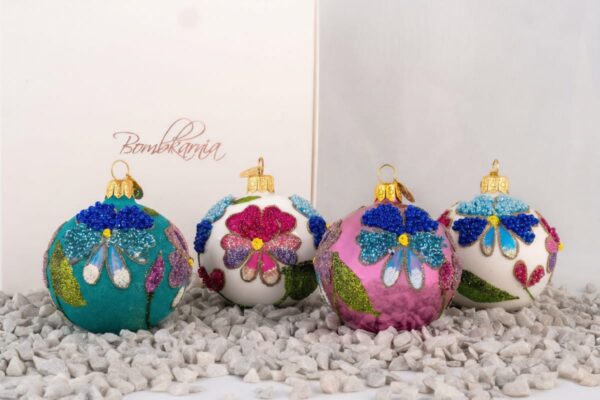
Bombkarnia is a Polish manufacturer of baubles and Christmas decorations operating since 2006. All ornaments are handmade, and Polish visual artists are invited to create them. Each piece is unique, and inspirations drawn from Polish folklore, baroque, and current trends translate into the unique character of the entire collection.
The store’s offer includes ornaments for every season, not just winter. New collections appear twice a year, in line with trends presented at international trade fairs. Such a broad approach attracts both lovers of tradition and seekers of original designs.
Glass baubles and Christmas decorations
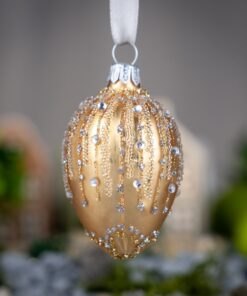
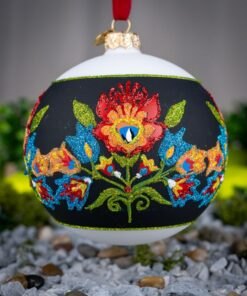
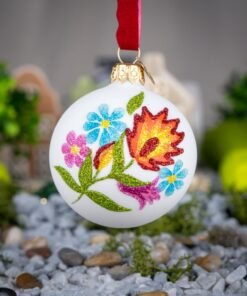
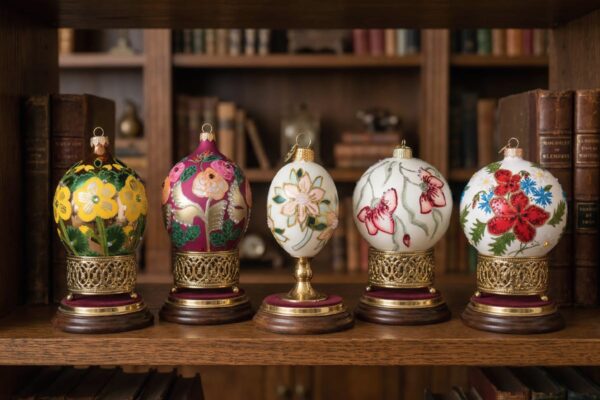
The largest part of the assortment consists of Christmas decorations, including classic glass baubles and figurines with unique shapes. Each ornament hand-painted by an artist becomes a small work of art.
Types of glass holiday decorations:
- classic glass Christmas baubles in various shapes and sizes
- baubles in the form of figurines depicting fairy tale characters, animals, and winter scenes
- decorations inspired by Polish folk art with regional patterns from the vicinity of Łowicz and Łęczyca
- wedding baubles as a keepsake and original gift for a special occasion
Glass figurine baubles are distinguished by their richness of detail. Artists paint each piece individually, paying attention to the precision of patterns and the vibrancy of colors. The result is a decoration that catches the eye on the Christmas tree and becomes the focal point of the entire decoration.
Check products in Christmas at Bombkarnia Shop
Easter decorations and year-round ornaments
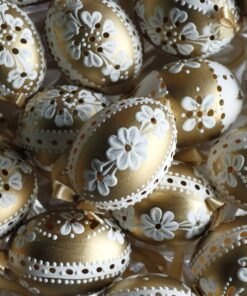
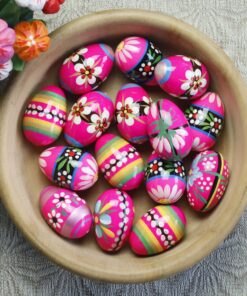
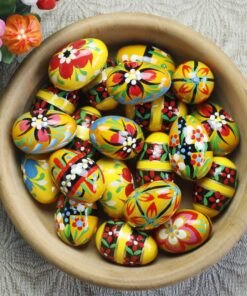
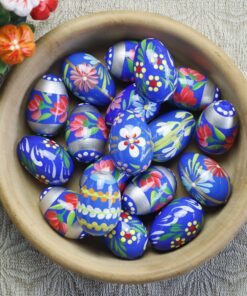
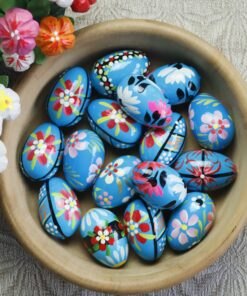
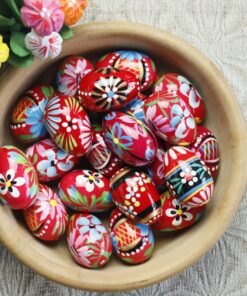
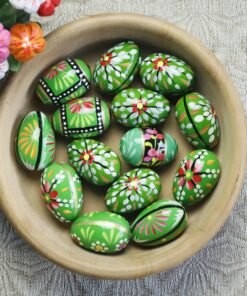
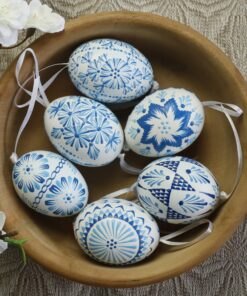
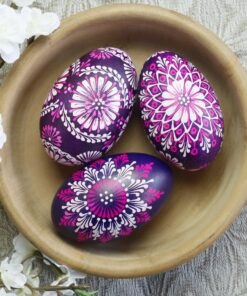
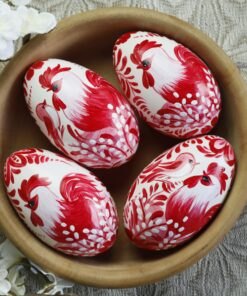
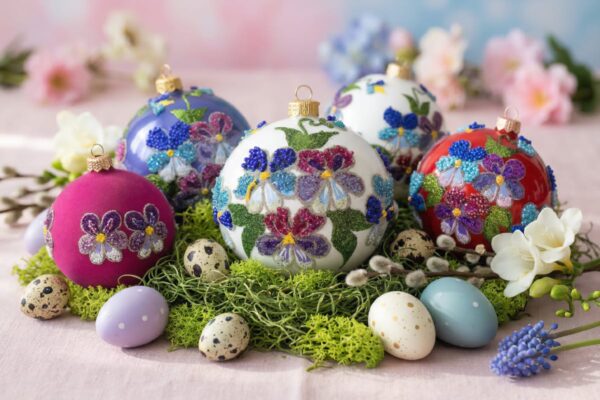
Bombkarnia is not limited solely to Christmas themes. The offer also includes Easter decorations, including hand-decorated glass Easter eggs. The patterns refer to Polish decorative traditions and work well as both home decor and a unique gift.
Customers of the store highly rate the quality of products, efficient service, and fast order fulfillment. These opinions can be checked on the Bombkarnia reviews profile, where dozens of satisfied customers describe their experiences.
The full assortment is available in the Bombkarnia online store. For those who want to see the decorations in person before purchasing, Bombkarnia also has a physical store. When choosing decorations or asking about custom orders, you can use the contact form and receive professional assistance.
Check products in Easter at Bombkarnia Shop
What compositions with small baubles look most effective on a Christmas tree?
Choosing the right decorations is half the battle. The other half lies in how you arrange them. Effective compositions with baubles require some planning, but the result is worth every moment spent thinking about the layout.
Grouping small baubles into clusters instead of distributing them evenly
Evenly distributing ornaments across the entire Christmas tree is a classic approach. However, grouping small baubles into clusters yields a much more striking result. Clusters of three to five baubles placed close together create strong visual accents that draw the eye.
It’s best to create clusters with baubles of a similar shade but different textures, for example, a shiny one next to a matte one. These clusters are placed in several spots on the tree, and the space between them is filled with individual baubles or garlands. The effect is more theatrical and sophisticated than a traditional arrangement.
Diagram for creating a cluster of baubles on a branch:
- Choose three to five baubles in a similar color but different textures.
- Hang the heaviest bauble first, deeper on the branch.
- Add more baubles around it, on neighboring twigs.
- Fill the space between them with fine decorative wire or a small sprig of mistletoe.
- Check the whole arrangement from a distance of two meters and, if necessary, make it denser.
Clusters of ornaments act as visual anchors, holding the gaze and building the structure of the entire decoration. The remaining baubles can be placed more freely because the clusters give the composition order.
Combining small baubles with garlands, lights, and pinecones
Small baubles become more attractive when combined with other decorative elements. Garlands and Christmas lights wrap around the branches and create a background against which the baubles stand out clearly. Pinecones, natural or gilded, add texture and evoke the woodland character of the tree.
It’s a good idea to place the lights before the baubles. Once the branches are lit, it’s easier to assess where color is lacking and where to hang more ornaments. Small baubles placed close to the light source reflect it, enhancing the sparkle of the entire Christmas tree.
Pinecones naturally fit between the baubles in the lower and middle sections of the tree. Gilded or silvered pinecones on a tree with small, shiny baubles create a cohesive, elegant composition.
Thematic compositions, woodland, palace, and artistic Christmas tree decoration
Thematic Christmas tree decorations allow you to express the individual character of your interior. A woodland Christmas tree combines natural pinecones, small ceramic mushrooms, wooden ornaments, and small baubles in shades of brown and moss. The whole arrangement evokes a winter forest and fits the popular “bio” trend.
A palace Christmas tree embodies opulence and sparkle. Small gold and cream baubles, crystal ornaments, glass spiders, and delicate pearl decorations create a look fit for aristocratic residences. Small baubles play a key role here, serving as a textured background against which larger, more impressive ornaments stand out.
An artistic Christmas tree offers the greatest freedom. Irregular compositions, asymmetrical clusters, a mix of textures, and unexpected color combinations create a unique and original decoration. Small baubles in intense colors, cobalt, emerald, or crimson, become pigments here, used to paint the entire silhouette of the tree.
The Most Common Mistakes When Hanging Small Baubles and How to Avoid Them
Even minor errors can ruin the effect of a carefully planned decoration. The first mistake is hanging all the baubles on the tips of the branches, without delving into the tree’s structure. This makes the Christmas tree look flat and one-dimensional.
The second mistake is a lack of color planning. Randomly mixing colors without a common denominator creates an impression of chaos. Even three colors in a thoughtful arrangement look better than ten without a concept.
Mistakes When Hanging Small Baubles:
- hanging all ornaments at the same branch depth
- too much concentration of baubles in one area of the tree
- ignoring the upper and lower parts of the tree
- mixing too many different ornament styles without a cohesive theme
- hanging baubles without checking the effect from a distance
Regularly reviewing the composition from at least two meters away is a habit that helps avoid most mistakes. The eye up close cannot assess proportions as well as a distant view.
Tip: When hanging small baubles on the Christmas tree, it’s worth stepping back every fifteen minutes to assess the whole from a distance. This allows you to quickly spot unevenness in the distribution of ornaments and correct the arrangement as you go, before the final effect is set.
FAQ: Frequently Asked Questions
How many small Christmas baubles are needed for a tree to look full and impressive?
The number of ornaments needed depends primarily on the height of the tree and the size of the baubles themselves. It is generally assumed that for every 10 cm of tree height, 3 to 4 ornaments are needed on average. Therefore, a 120 cm tall Christmas tree requires approximately 40 to 50 small baubles for dense hanging.
Small baubles with a diameter of 3 to 4 cm fill the space much more tightly than larger ornaments, so their total number is higher. With a decoration style featuring many layers of ornaments, meaning baubles near the trunk, in the middle of branches, and at their ends, the requirement increases by up to 30 percent compared to basic estimates.
What is the difference between small glass and plastic baubles, and which option should I choose for my Christmas tree?
Glass baubles have a distinct aesthetic advantage. They are often hand-painted or decorated, reflect light from the lamps in a unique way, and give the Christmas tree an elegant, classic character. Their drawback is fragility; if they fall from a branch, they can break and pose a hazard.
Plastic baubles are more durable and lighter. They do not bend thin branches and are particularly suitable for trees with a delicate structure. They are a good choice for homes with children or pets, where the risk of ornaments being knocked off is higher.
In terms of appearance, glass remains the material of choice when visual effect and color durability over many seasons are important. Plastic, on the other hand, is a practical and safe choice.
How to Properly Store Small Christmas Baubles So They Don’t Lose Their Shine and Color?
Storing Christmas baubles after the season requires a few simple rules. Before putting them away, each ornament should be gently cleaned of dust with a soft brush. Then, each bauble is placed in a separate plastic bag and then into a box with compartments.
The storage location should be dry and dark. Moisture causes the varnish to peel, while direct sunlight fades the colors of even the best-made ornaments. The ideal storage temperature is around 15 to 20 degrees Celsius in a dry room.
Do Small Christmas Baubles Fit Every Interior Decoration Style?
Small Christmas ornaments are characterized by their exceptional versatility. In a classic style, glass baubles in deep red, gold, and green work well. In a Scandinavian style, ceramic miniatures in white and gray, referencing simple, folk forms, are best.
A monochromatic Christmas tree decoration with small matte balls in a single shade is a proposal for fans of modern minimalism. Each of these styles uses small-sized ornaments in a different way, but the effect is always cohesive and thoughtful. Small baubles simply fit into any concept because they do not dominate other decorative elements but complement them.
Summary
Small Christmas baubles are a tool that subtly but effectively changes the appearance of a Christmas tree. They fill out the tree, give it depth, and emphasize its natural silhouette. Regardless of the decoration style, whether it’s classic, minimalist, Scandinavian simplicity, or palatial opulence, small ornaments serve as the foundation for any festive composition. Appropriately chosen for the size of the Christmas tree and placed with attention to proportion, they create an effect that distinguishes the decoration from others.
The key to success is combining small baubles with other decorative elements, grouping them into thoughtful compositions, and avoiding common mistakes. Decorating a Christmas tree with small baubles is a process that requires a bit of patience but yields results visible at first glance. Every tree, regardless of species and size, gains a new dimension when the ornaments are chosen consciously and placed with a sense of proportion.

 PL
PL
 Komozja - Open egg - Christmas tree - Holly
1 × 890.00 zł
Komozja - Open egg - Christmas tree - Holly
1 × 890.00 zł Lipsk goose egg - black
1 × 75.00 zł
Lipsk goose egg - black
1 × 75.00 zł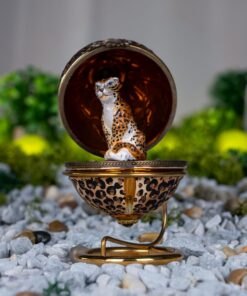 Komozja - Open egg - Leopard - cents
1 × 890.00 zł
Komozja - Open egg - Leopard - cents
1 × 890.00 zł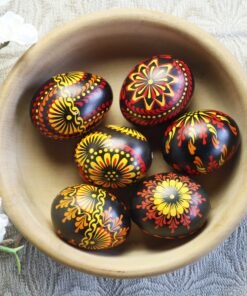 Lipsk chicken egg - black
1 × 60.00 zł
Lipsk chicken egg - black
1 × 60.00 zł