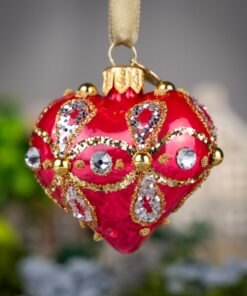
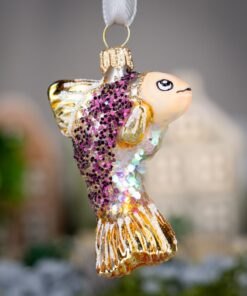
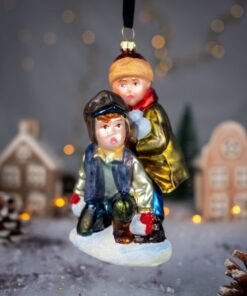
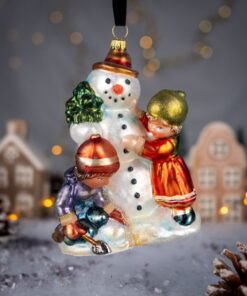
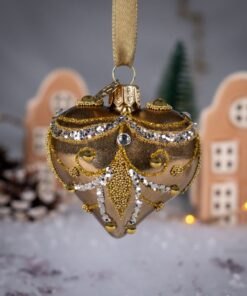
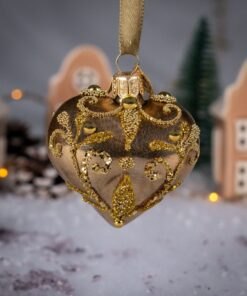
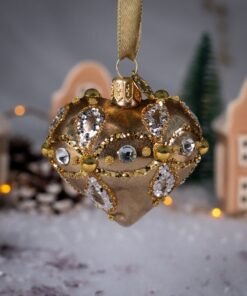
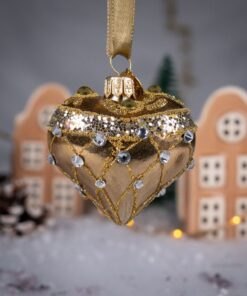
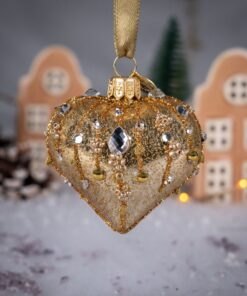
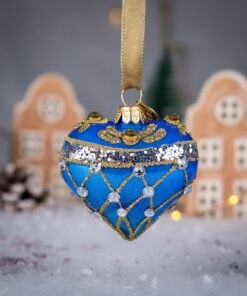
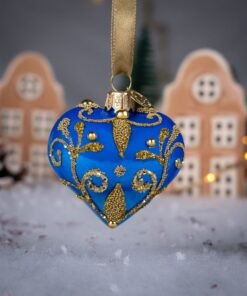
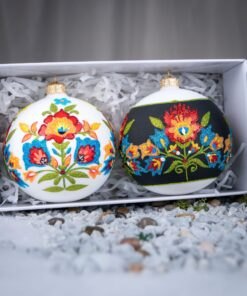
Glass Christmas tree ornaments hold hundreds of years of symbolism, bringing happiness and prosperity to the home. The tradition of hanging figurines of carp, angels, horseshoes, or apples dates back to ancient beliefs. Choosing an ornament is a ritual, an expression of hope for the new year. Discover the meaning of each figurine to consciously decorate your tree.
Every year, millions of homes in Poland and around the world are filled with the glow of glass ornaments. However, glass Christmas tree figurines are much more than just shiny decorations. Behind every shape, color, and pattern lies a deep symbolism that dates back hundreds of years. The tradition of hanging glass ornaments on a Christmas tree did not arise by chance. Each motif had a specific meaning and was an invitation to bring happiness, health, and prosperity into the home.
In the past, people believed that appropriately chosen ornaments could attract good energies into the home. When selecting glass Christmas tree ornaments with symbolism in mind, people would reach for figurines of carp, angels, horseshoes, or apples. Each of these forms had its own language. Today, this symbolism has not disappeared but has been revived, and more and more people are consciously choosing ornaments with deeper meaning.
Knowing this symbolism makes decorating the Christmas tree a true ritual. Choosing a specific figurine is not just an aesthetic decision, but also an expression of hope and expectations for the coming year. This is precisely why knowing which glass Christmas figurines bring good tidings is so valuable and practical.
Which glass Christmas tree figurines bring happiness and prosperity?
The world of glass Christmas tree ornaments is rich in motifs related to prosperity. Not every ornament has the same meaning. Some have served as amulets for centuries, and their presence on the Christmas tree was meant to protect household members and attract the best to the home.
Gold and red baubles as symbols of prosperity in European tradition
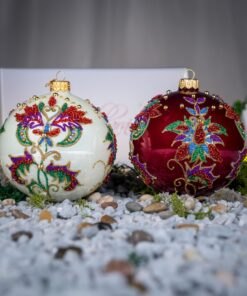
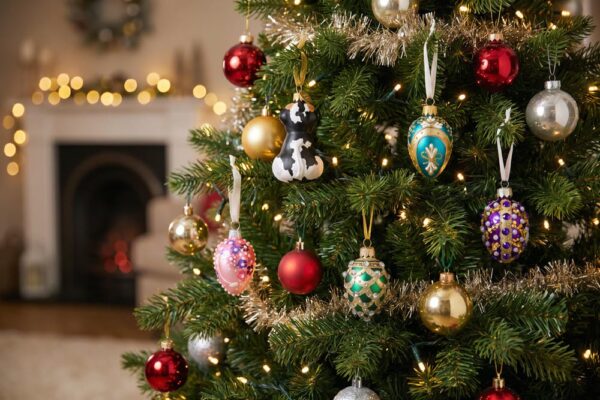
Gold has been associated with wealth, eternity, and divine power for centuries. Gold glass Christmas baubles refer to these values. In European tradition, the golden color of ornaments signified prosperity, durability, and family security. Hanging them on the Christmas tree was a gesture inviting prosperity for the entire coming year.
Red baubles have equally deep roots. They symbolize love, the warmth of the hearth, and courage in experiencing life. Red wards off sadness and evil energies, while simultaneously filling the home with vitality. The combination of gold and red on a Christmas tree is considered one of the most classic sets, expressing both joy and abundance.
Glass bells, horseshoes, and four-leaf clovers on the Christmas tree
Glass bells are ornaments with a very specific symbolism. They herald the arrival of the holidays, bring good news, and joyful events to the family. According to Christian tradition, their sound announced the defeat of evil and the victory of good. Hanging glass bells on the Christmas tree was associated with the hope for happy news throughout the year.
Glass horseshoes and four-leaf clovers are other classic lucky charms. The horseshoe has been considered a symbol of protection against misfortune and attracting good fortune for centuries. A four-leaf clover is a rarity in nature, which is why it has always been treated as a sign of exceptional luck. Their glass counterparts on the Christmas tree carry this folk belief into a beautiful, decorative dimension.
Popular glass ornaments that bring good luck:
- Glass bells heralding good news
- Horseshoes symbolizing protection and good fortune
- Four-leaf clovers as a sign of exceptional luck
- Glass mushrooms signifying abundance and health
All these forms share a common denominator: each was a response to the human need to believe in a better tomorrow. Glass artisans perfectly understood this need and transformed it into beautiful, durable ornaments that were passed down from generation to generation.
Glass carp, elephant, and turtle figurines as amulets
Carp is one of the most recognizable symbols of Christmas in Poland. As a glass Christmas tree ornament, the carp refers to the centuries-old tradition of the Christmas Eve fish, which signifies abundance, health, and a Lenten life in accordance with Christian values. Fish in general is one of the oldest Christian symbols, and its presence on the Christmas tree indicates the birth of Jesus.
A glass elephant is an ornament originating from Far Eastern traditions, but well-rooted in European symbolism of luck. An elephant with its trunk pointing upwards is considered a sign of prosperity, strength, and wisdom. Hung on the Christmas tree, it is meant to attract lasting good fortune to the home and protect the family from difficulties.
A glass turtle also belongs to ornaments with strong symbolism. The turtle symbolizes longevity, patience, and perseverance. In many cultures, it is also a sign of stability and peace. A glass turtle figurine on the Christmas tree is an expression of longing for a harmonious, peaceful life and a wish for long, happy years for the entire family.
Glass stars and angels as harbingers of good luck in the home
The star at the top of the Christmas tree is one of the most recognizable symbols of the holidays. A glass star refers to the Star of Bethlehem, which guided the Three Kings. Placed at the top of the tree, it is meant to be a guiding light for those who have left home. In folk tradition, the star helped with returns home from distant places.
Glass angels are ornaments with an exceptionally warm symbolism. They symbolize spirituality, care, and home protection. A glass angel on the Christmas tree is an invitation for a good guardian under the family’s roof. Its presence was meant to ward off all evil and surround the household members with an invisible protective shield.
Where does the symbolism of glass Christmas tree ornaments come from and what does it mean?
The history of glass Christmas ornaments is also the history of human needs, beliefs, and craftsmanship. The symbolism we see in glass figurines today has developed over centuries. It was built by Christian traditions, folk beliefs, and the skilled craftsmanship of glassmakers from Central Europe.
History of Glass Figurines from Thuringia and Czech Bohemia
The cradle of glass Christmas tree ornaments is Lauscha, a small town in Thuringia, Germany. According to historical records, in 1847, a poor glassblower from Lauscha created the first glass balls for decorating Christmas trees. Instead of expensive nuts and apples, which he could not afford, he made them from glass. This tradition quickly spread throughout the world, and Lauscha became the world capital of glass Christmas tree ornaments.
Concurrently, glassmaking craftsmanship developed in Czech Bohemia. As early as the end of the 17th century, German glassmakers migrated between Bavaria, Thuringia, and Bohemia, exchanging techniques and designs. Bohemian glassmaking contributed exceptional precision and a wealth of patterns to the holiday tradition. After World War II, some artisans moved to West Germany, continuing this tradition in new locations.
Lauscha remains a symbol of this tradition to this day, and its artisanal heritage is inscribed on the UNESCO Intangible Cultural Heritage list. Poland also became an important center for the production of glass ornaments. After 1989, private, family-run manufactories were revived, returning to traditional techniques of hand-blowing and painting.
The Significance of Glass, Gold, Ruby, and Cobalt Colors in Holiday Ornamentation
The colors of glass Christmas tree ornaments were never accidental. Each hue carried a specific message and was carefully chosen by artisans and buyers. The following table presents the most important colors and their traditional symbolism:
| Color |
Symbolism |
Traditional role on the Christmas tree |
| Gold |
Wealth, eternity, divine power |
Attracting prosperity and good fortune |
| Red (ruby) |
Love, courage, hearth’s warmth |
Protection of the family, joy of life |
| Cobalt (blue) |
Peace, frosty atmosphere, nobility |
Harmony in the home, winter magic |
| Silver |
Purity, new beginnings, blessing |
Cleansing the space, protection |
| Green |
Hope, fertility, perseverance |
Life force, renewal of nature |
Red and cobalt are colors particularly valued by ancient glassmakers. Ruby glass ornaments were created by adding gold to the glass mixture, which made them expensive and extraordinary. The color cobalt, on the other hand, was associated with the deep winter sky and was a symbol of peace and nobility.
Plant and animal motifs on glass baubles and their ancient symbolism
Plant motifs on glass baubles have their roots in ancient beliefs about fertility and harvest. Pinecones, acorns, and nuts on glass ornaments symbolized fertility and abundant harvests. They were hung on the Christmas tree with the hope that the home would not experience poverty or hunger in the new year.
Animal motifs had equally strong symbolism. Birds on glass baubles were messengers of divine love and peace, harbingers of good news. Fish, mushrooms, and fruits together created an image of abundance and gratitude for nature’s gifts. The entirety of the plant and animal symbolism formed a coherent picture of a world in which humans desire to live in harmony with nature and benefit from its gifts.
How to recognize glass Christmas tree figurines with high symbolism of happiness?
Not every glass Christmas ornament carries the same symbolic power. The quality of craftsmanship, materials, and decorating techniques directly influence how deeply a given figurine is rooted in tradition. Knowing what to look for makes it easier to choose truly exceptional ornaments.
Hand-blown glass figurines and their advantage over mass production
Hand-blown glass figurines represent the pinnacle of glassmaking craftsmanship. The process of their creation has remained unchanged for over a hundred years. A glassblower heats a glass rod in a flame at a temperature of 800 to 1000 degrees Celsius and shapes it with the force of their breath and hand movements. Each such figure is one of a kind, and minor differences in shape and color are proof of its handmade origin.
Mass-produced ornaments, while aesthetically pleasing, lack this uniqueness and the energy of artisanal work. Hand-blowing allows for the preservation of all the details and subtleties of shape that are lost or simplified in machine production. Ancient artisans believed that a part of themselves was put into each ornament, giving it special symbolic value.
It is worth paying attention to the finishing of the figurine. Authentic handmade Christmas ornaments have slightly irregular surfaces, hand-painted details, and clearly visible traces of the artisan’s work. It is precisely these features that distinguish them from industrial copies.
Decorations with gold, silver, and enamel as indicators of symbolic value
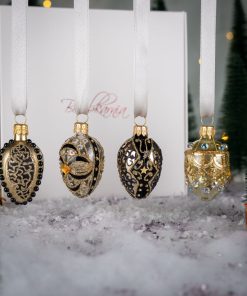
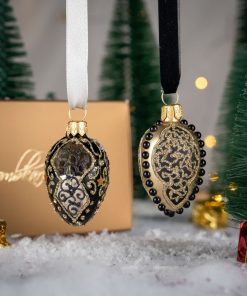
Gilding and silvering on glass ornaments are not just decorative. Silvering with silver nitrate is a traditional technique used in Polish and European manufactories for decades. Thanks to this process, the interior of glass spheres shines exceptionally, and the ornament itself gains symbolic value associated with silver as a protective metal.
Enamel decorations allow for durable, vibrant colors and precise patterns that cannot be achieved by other methods. Enamel applied by hand by an artist creates paintings that can last for many generations. Ornaments decorated with gold, silver, and enamel are not only beautiful but also carry a rich symbolic layer associated with ancient beliefs about the power of these materials.
When choosing glass Christmas tree ornaments, it’s worth taking a close look at the decoration method. Irregular, hand-drawn patterns and visible brushstrokes are a sure sign of an artist’s handwork, not mass production.
Certificates of Authenticity and Craftsmanship Markings on Glass Ornaments
Authentic, high-quality glass Christmas tree ornaments often come with certificates of authenticity or markings confirming they are handmade. Such documents indicate the specific manufacturer, production region, and technique used. This is very important information as it confirms the continuity of craftsmanship tradition.
Poland is one of the last countries in Europe where baubles and holiday figurines are primarily made by hand. Craftsmanship markings on packaging or labels, such as “hand-blown,” “hand-painted,” or the name of a specific Polish manufacturer, are a guarantee of authenticity. It’s worth choosing ornaments from manufacturers who openly discuss their working methods and company history.
Tip: When looking for genuine handcrafted ornaments, check if the packaging indicates hand-blowing and hand-painting. Markings such as “hand-blown” or “ręcznie dmuchana” (hand-blown) are irrefutable proof of high-quality craftsmanship.
Handmade Glass Christmas Tree Ornaments from Bombkarnia Store
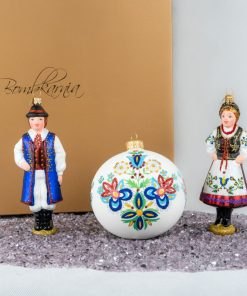
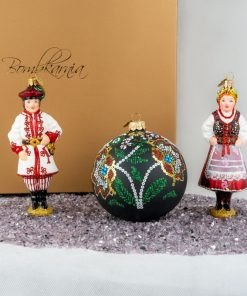
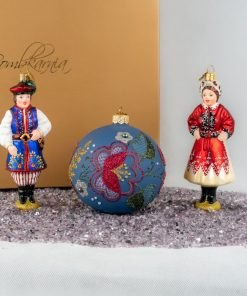
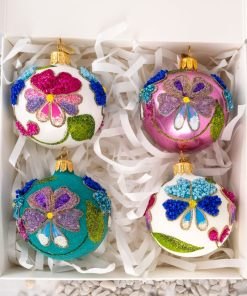
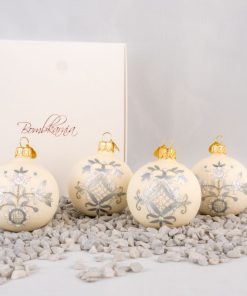
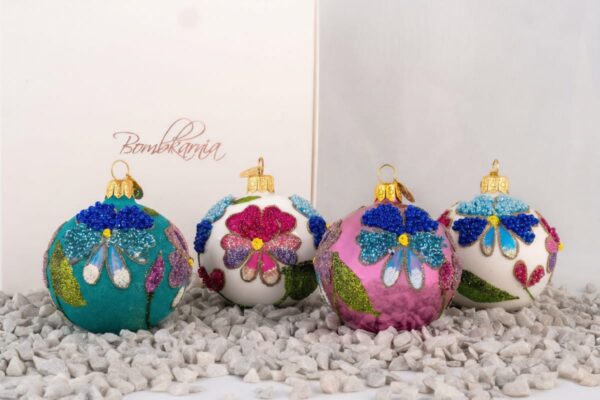
The tradition of hand-decorating glass holiday ornaments has lived on in Poland for generations. Bombkarnia is a Polish manufacturer operating since 2006, dedicated to preserving this tradition every day. All handmade Christmas tree ornaments are created with the involvement of Polish visual artists. They draw inspiration from Polish folklore, folk fabric patterns, paper cutouts, and old regional costumes.
Collections are created twice a year: in spring and winter. Each series reflects current decorative trends while maintaining the deeply rooted character of Polish artistic craftsmanship.
Glass Baubles and Christmas Figurines with Rich Symbolism
The offer for Christmas includes a wide selection of classic shapes and motifs with rich symbolism. Of particular interest are baubles in the form of figurines, depicting, among other things:
Popular Motifs of Glass Figurines:
- Angels in various poses and outfits as symbols of protection and blessing
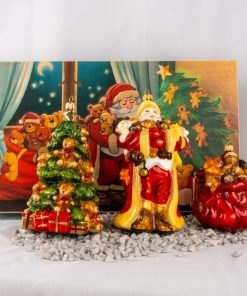
- Santa Claus figurines referencing the tradition of giving gifts to loved ones
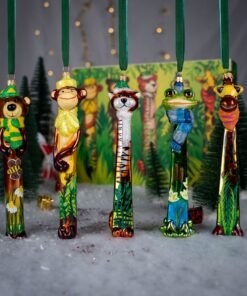
- Animals, plants, and fruits symbolizing fertility and abundance
- Figures in regional costumes from the Łowicz and Łęczyca areas
Each of these figures is hand-painted by an experienced artisan. The precision of the decorations and attention to detail in the costumes and faces result in true miniature works of art. The ornaments stand out on the Christmas tree and easily become cherished keepsakes for years to come.
Check products in Figure Baubles at Bombkarnia Shop
Glass Ornaments for Other Occasions Throughout the Year
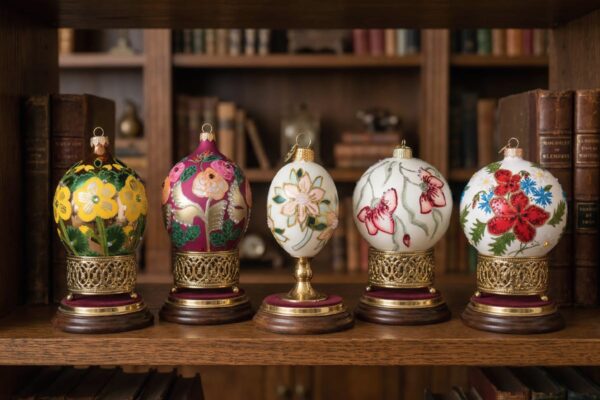
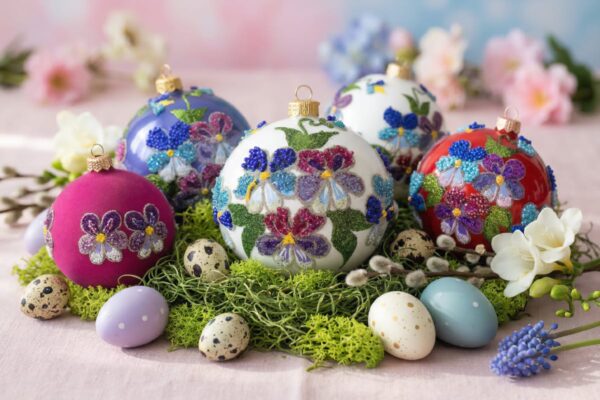
Bombkarnia is not limited solely to Christmas. The offer also includes wedding baubles, which make a unique gift for newlyweds. In spring, Easter decorations appear, including hand-decorated glass Easter eggs, which impress with the precision of their designs.
Customers appreciate Bomkarnia for its quality craftsmanship, fast shipping, and reliable service, as confirmed by numerous positive online reviews. Each order is handled with the utmost care, and the offer also includes custom designs for special requests.
The full collection of glass Christmas ornaments is available in the online store. If you have any questions about products or orders, you can use the contact page or visit the physical store. The Bombkarnia team will gladly advise you on choosing the perfect ornament for any occasion.
Check products in Sets of Baubles and Christmas decorations at Bombkarnia Shop
What Motifs on Glass Christmas Figurines Attract Prosperity According to Tradition?
The Christmas tree tradition is full of motifs that have been associated with abundance and prosperity for generations. It’s no coincidence that these specific shapes were hung in homes. Each had a culturally ingrained meaning, passed down orally through centuries.
Glass Fruits, Apples, and Grapes as Symbols of Harvest on the Christmas Tree
Glass fruits are among the oldest motifs in the history of Christmas ornaments. Apples, grapes, pears, and plums made of glass refer to beliefs where fruit was a divine gift ensuring nourishment and health. For our ancestors, good harvests meant survival through winter, so the fruit motif on the Christmas tree was an expression of deep gratitude and hope.
Glass Christmas apples hold particular significance. They allude to the biblical fruit from the Garden of Eden, symbolizing both abundance and the choice between good and evil. Originally hung on live trees, they were eventually replaced by glass counterparts when natural fruits were unavailable or too fragile.
Fruit Motifs on Christmas Ornaments:
- Glass apple referring to biblical abundance and harvest
- Grapes symbolizing joy, fertility, and blessing
- Pear signifying goodness and harmony in the family
- Pine cone and acorn as signs of fertility and the forces of nature
Glass grapes, in turn, are a symbol of joy, fertility, and abundance. In the tradition of many European cultures, grapes on the Christmas tree were meant to ensure abundance and fullness of life for the family. Grape-shaped ornaments made of glass are particularly beautiful because the glassmaker can render each seed with astonishing precision.
Glass figurines of Santa Claus and the chimney sweep as bringers of good luck
A glass figurine of Santa Claus is one of the most recognizable Christmas tree ornaments. Santa Claus, also known as Father Christmas, is in European tradition the guardian of the hearth who brings good luck and protects the family. His image on the Christmas tree symbolizes kindness, generosity, and care for loved ones.
A glass chimney sweep is a unique ornament deeply rooted in Polish tradition. Encountering a chimney sweep on the street was long considered a lucky sign. Touching his button was said to bring good fortune and the fulfillment of wishes. A glass figurine of a chimney sweep on the Christmas tree brings this belief into the home, inviting good luck for the entire year.
Traditional figurines that bring good luck:
- Santa Claus as the guardian of the home and protector of family happiness
- Chimney sweep symbolizing good luck and the fulfillment of wishes
- Elf and gnome protecting the hearth from misfortune
When choosing glass figurines of a chimney sweep or Santa Claus for your collection, it is worth opting for hand-painted pieces from Polish manufactories. Such ornaments combine the beauty of craftsmanship with the power of centuries-old symbolism, which gives the festive season a deeper, more intimate dimension.
Tip: Glass figurines of Santa Claus and the chimney sweep look best in the center of the Christmas tree, on prominent branches. Placing them in the central spot of the tree emphasizes their role as guardians of domestic happiness.
FAQ: Frequently Asked Questions
Which glass Christmas tree figurines most effectively symbolize prosperity according to tradition?
European tradition distinguishes several figures that have been associated with prosperity and good fortune for generations. Glass Christmas apples refer to the biblical fruit and symbolize health, beauty, and abundance. Glass carp figurines are associated with Polish Christmas Eve tradition and signify abundance and good luck for the entire year. Glass grapes, in turn, embody fertility and the joy of life.
Equally important are glass angels and Christmas stars. The angel symbolizes care and protection for household members, while the Star of Bethlehem guides loved ones far from home back to their homes. Each of these forms has its own deep symbolism, proven over centuries.
Why Does the Color of Glass Christmas Ornaments Have Symbolic Meaning?
The colors of glass Christmas ornaments were never random. Gold and silver have been considered symbols of wealth, material success, and eternity for centuries. Red Christmas baubles symbolize love, energy, and vitality, and their presence on the Christmas tree was meant to attract warmth and good energy into the home.
Cobalt blue is associated with peace and nobility, while green signifies hope and the rebirth of nature’s forces. Yellow and orange bring optimism and faith in a better future. Consciously combining colors on the Christmas tree is an ancient art that allows one to express wishes for the coming year.
Where Does the Tradition of Hanging Glass Figurines on a Christmas Tree Come From?
The history of glass Christmas ornaments dates back to the mid-19th century. The first glass balls were created in Lauscha, a small town in Thuringia, Germany. A poor glassblower, unable to afford apples and nuts for decoration, made them himself out of glass. This tradition spread very quickly, and Lauscha became the world capital of glass ornaments.
Concurrently, the glassmaking craft developed in Bohemian Bohemia, where glass masters brought extraordinary precision and richness of design to the holiday tradition. Poland, in turn, became one of the more important European centers for handmade glass ornament production, especially after 1989, when family manufactories were revived.
How to Distinguish Hand-Blown Glass Christmas Figurines from Mass Production?
Hand-blown glass figurines have several features that are easy to spot. The surface of an authentic ornament is slightly irregular, and the hand-painted details show visible brushstrokes. The shapes are sometimes slightly asymmetrical, which is a natural result of the craftsman’s work, not a defect.
Mass-produced ornaments are perfectly uniform and smooth, lacking these subtle differences. The packaging of an authentic handmade Christmas ornament should always indicate the manufacturing technique, for example, “hand-blown” or “hand-painted.” Certificates of authenticity and the designation of a specific manufactory are additional proof of high quality and artisanal origin.
Summary
Glass Christmas figurines with rich symbolism are more than just decorations. Behind each shape lies centuries of tradition, belief in the power of symbols, and the craftsmanship of artisans from Thuringia, Bohemia, and Polish manufactories. Apples and grapes invite abundance, carp and elephants attract prosperity, angels protect the home, and chimney sweeps and Santa Claus bring good luck. Each of these ornaments is a carrier of history and human hopes passed down through generations.
Consciously decorating the Christmas tree is an art that gives the holidays a deeper meaning. By choosing hand-blown glass figurines from authentic manufactories, one cultivates tradition while surrounding the home with beauty that lasts for years. The symbolism contained in glass Christmas ornaments reminds us that Christmas has always been a time of dreams for a better, fuller, and happier life.

 PL
PL
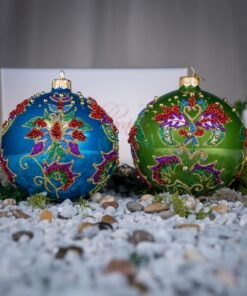 Kontusz embroidery set - Noble collection - blue and green
1 × 276.00 zł
Kontusz embroidery set - Noble collection - blue and green
1 × 276.00 zł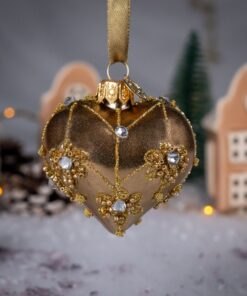 Hearts – Flowers on Gold
1 × 49.00 zł
Hearts – Flowers on Gold
1 × 49.00 zł